LaborScout

Web Design · B2B2C · MVP · Product Design · Design System

LaborScout is a B2B/B2C recruitment platform built to solve the full hiring cycle — from posting a job offer to receiving the first qualified resume. Designed for the Paraguayan market, the platform connects recruiters and job seekers through a transparent, structured experience that removes friction from both sides of the process.

Client

LaborScout

Services

Product Strategy Web Design Design System User Research & Testing

Industries

HR & Recruitment SaaS

Date

2021 - 2022
The ask

Building a recruitment platform from scratch — defining product strategy, key user flows, and a scalable design system for both recruiter and job seeker experiences.

The Challenge

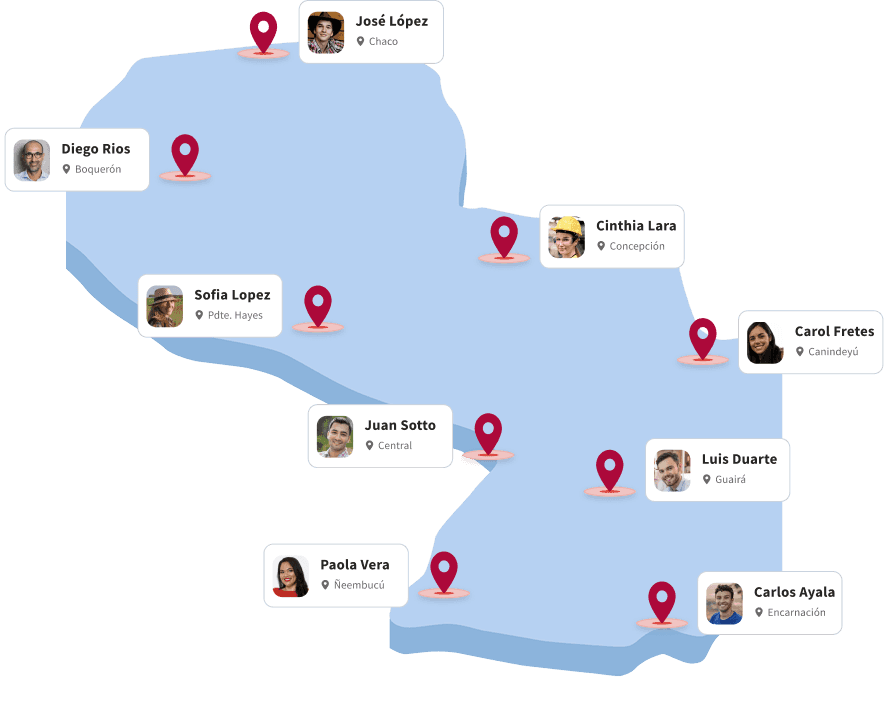
Paraguay lacked an effective digital recruitment solution. Existing portals were hard to use, job offers were largely expired, and the process of finding or hiring talent was manual, chaotic, and opaque. LaborScout needed to solve this for two audiences simultaneously — job seekers struggling to find and apply to opportunities, and recruiters drowning in unqualified applications and poor tooling. As Head of Product Design, I led discovery, MVP definition, UX strategy, and end-to-end design for both the recruiter and job seeker experiences.
The approach

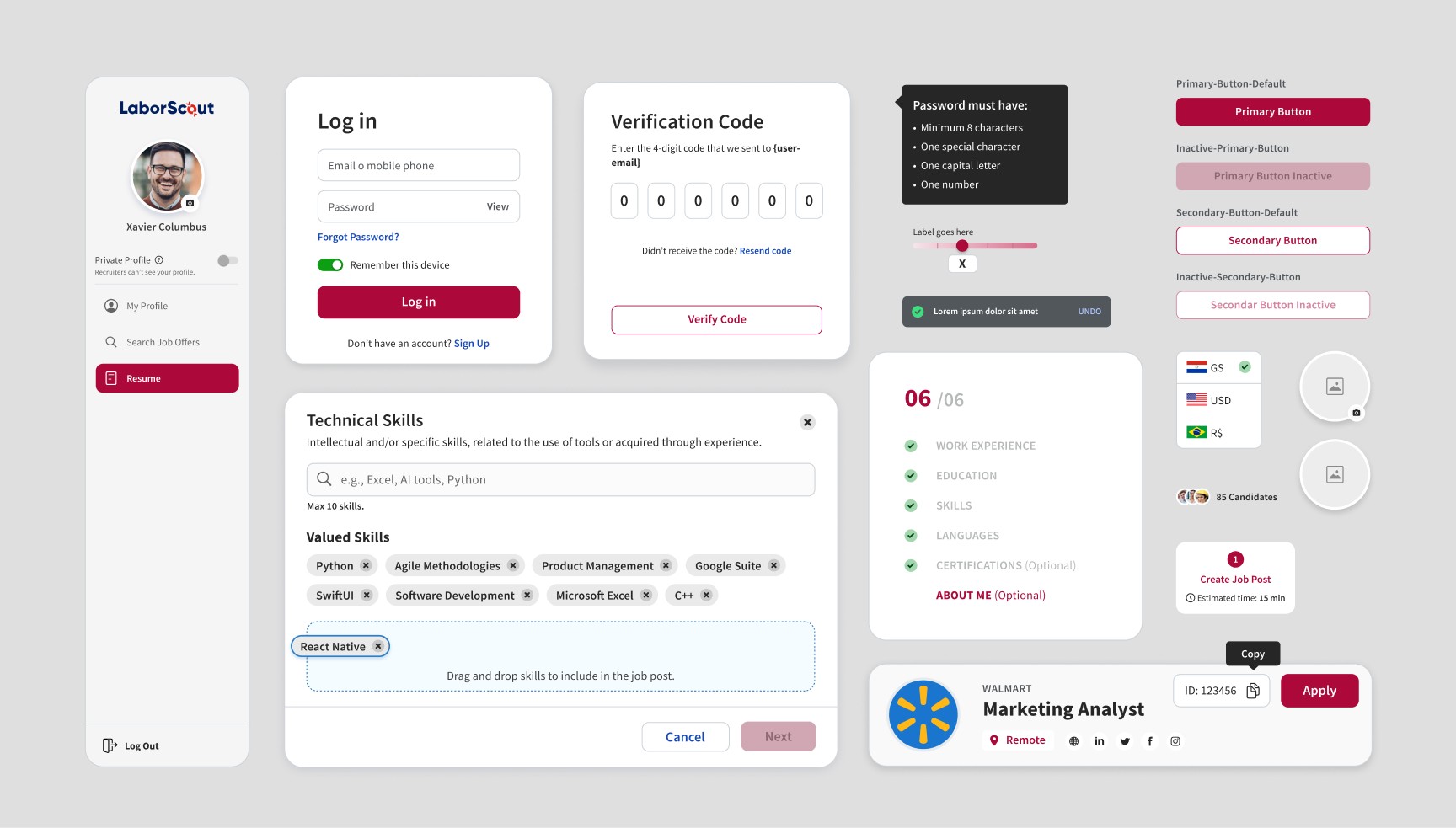
Validating assumptions through user interviews, then translating findings into two distinct product flows — one for recruiters, one for job seekers — built on a shared design system.
Login — Default state

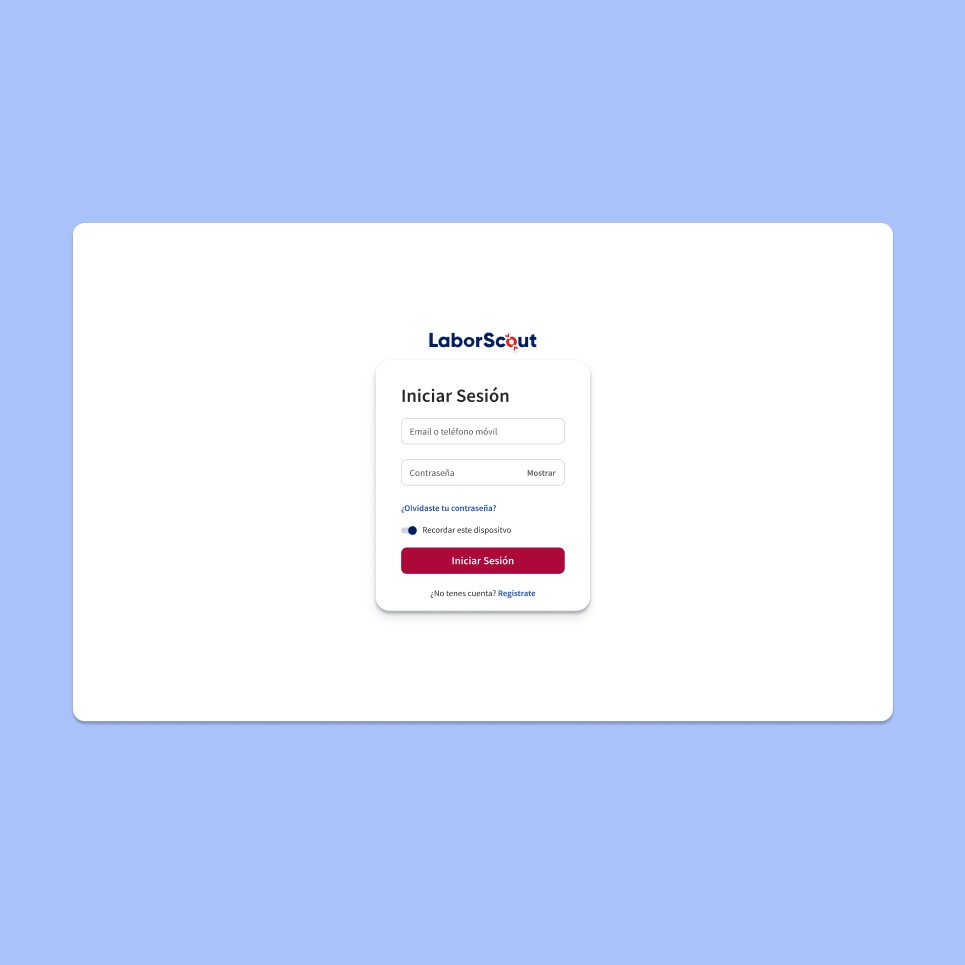
A minimal, centered layout that removes all visual noise. Single-column form structure with clear input hierarchy, inline password visibility toggle, and a persistent device memory option reduce cognitive load and speed up return user login.

Input Error State + Verification Code

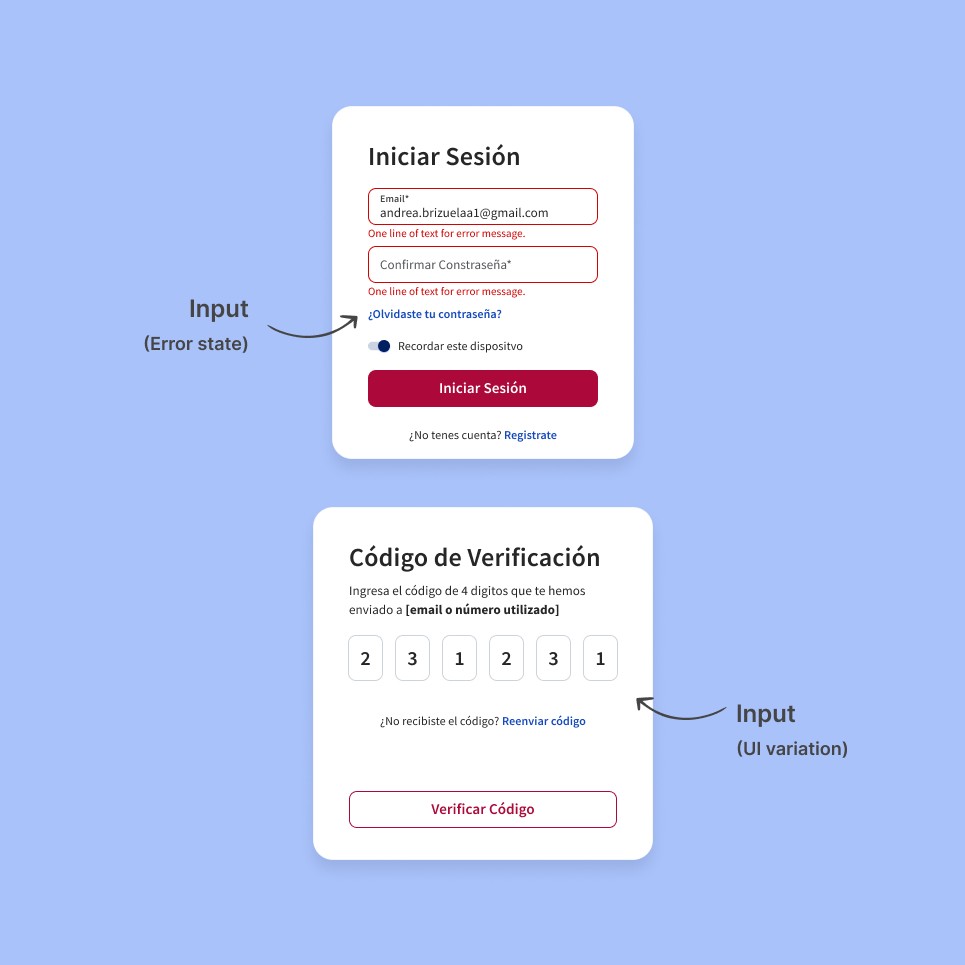
Error states are surfaced inline at the field level — not as modal interruptions — keeping the user in context and reducing form abandonment. Red border and inline messaging follow WCAG contrast guidelines while maintaining layout stability. The verification code flow uses a segmented single-character input pattern, a UI variation that reduces transcription errors and provides clear progress feedback.

Login — Default state

A minimal, centered layout that removes all visual noise. Single-column form structure with clear input hierarchy, inline password visibility toggle, and a persistent device memory option reduce cognitive load and speed up return user login.

Input Error State + Verification Code

Error states are surfaced inline at the field level — not as modal interruptions — keeping the user in context and reducing form abandonment. Red border and inline messaging follow WCAG contrast guidelines while maintaining layout stability. The verification code flow uses a segmented single-character input pattern, a UI variation that reduces transcription errors and provides clear progress feedback.

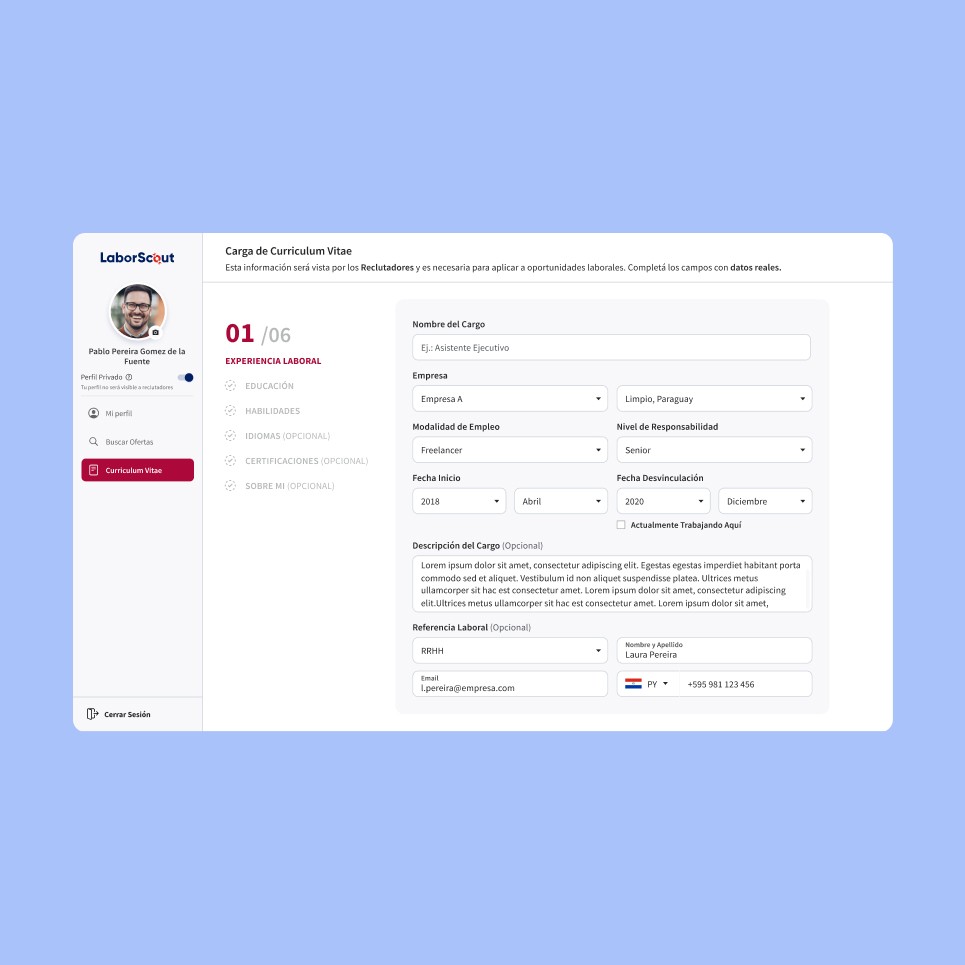
CV Builder

The resume creation flow uses a stepped architecture (01/06) that breaks a cognitively heavy task into manageable sections, reducing abandonment. A persistent left-side navigation provides spatial awareness throughout the process while keeping core actions — job search, profile, CV — always accessible. Form fields are structured with logical grouping, reducing input errors and improving data quality for recruiters.

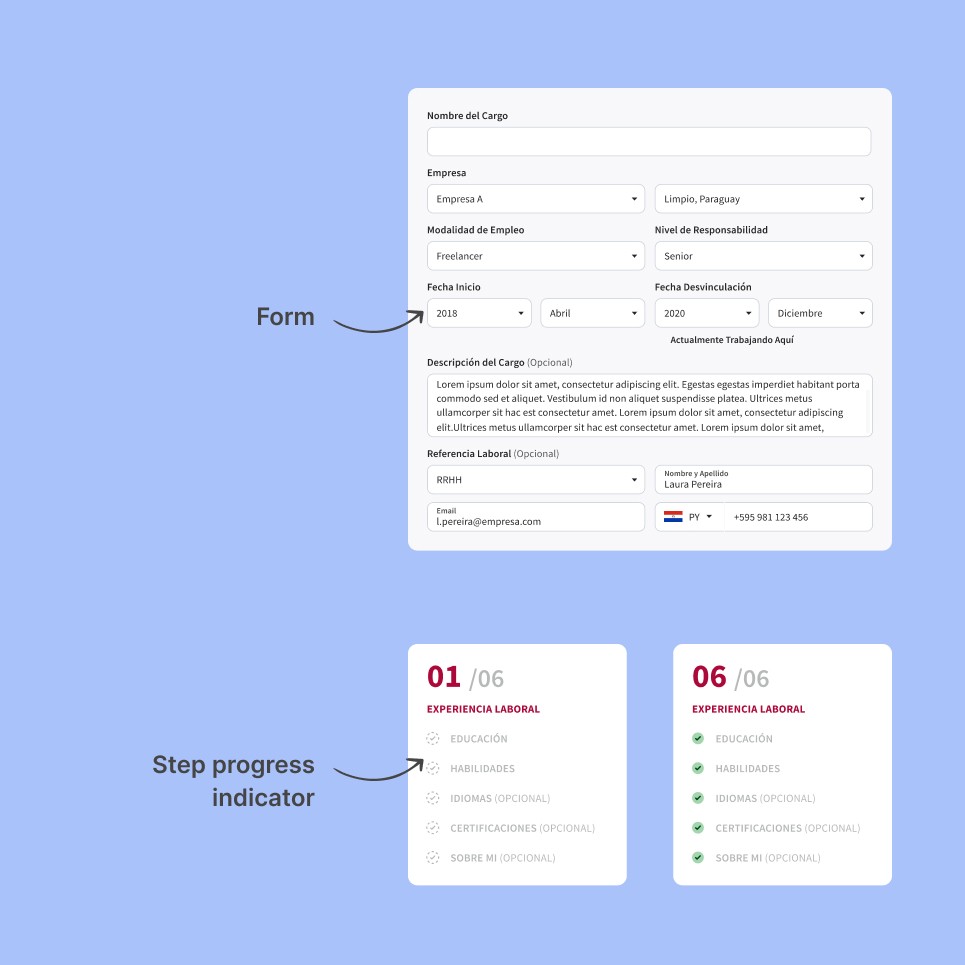
Form Structure + Step Progress Indicator

The multi-step form isolates sections by information type, applying progressive disclosure to prevent cognitive overload. Required and optional fields are clearly differentiated. Checkmarks change color upon completion, leveraging established mental models for progress confirmation and reinforcing a sense of achievement that drives form completion rates.

CV Builder

The resume creation flow uses a stepped architecture (01/06) that breaks a cognitively heavy task into manageable sections, reducing abandonment. A persistent left-side navigation provides spatial awareness throughout the process while keeping core actions — job search, profile, CV — always accessible. Form fields are structured with logical grouping, reducing input errors and improving data quality for recruiters.

Form Structure + Step Progress Indicator

The multi-step form isolates sections by information type, applying progressive disclosure to prevent cognitive overload. Required and optional fields are clearly differentiated. Checkmarks change color upon completion, leveraging established mental models for progress confirmation and reinforcing a sense of achievement that drives form completion rates.

Landing page. Spanish version.
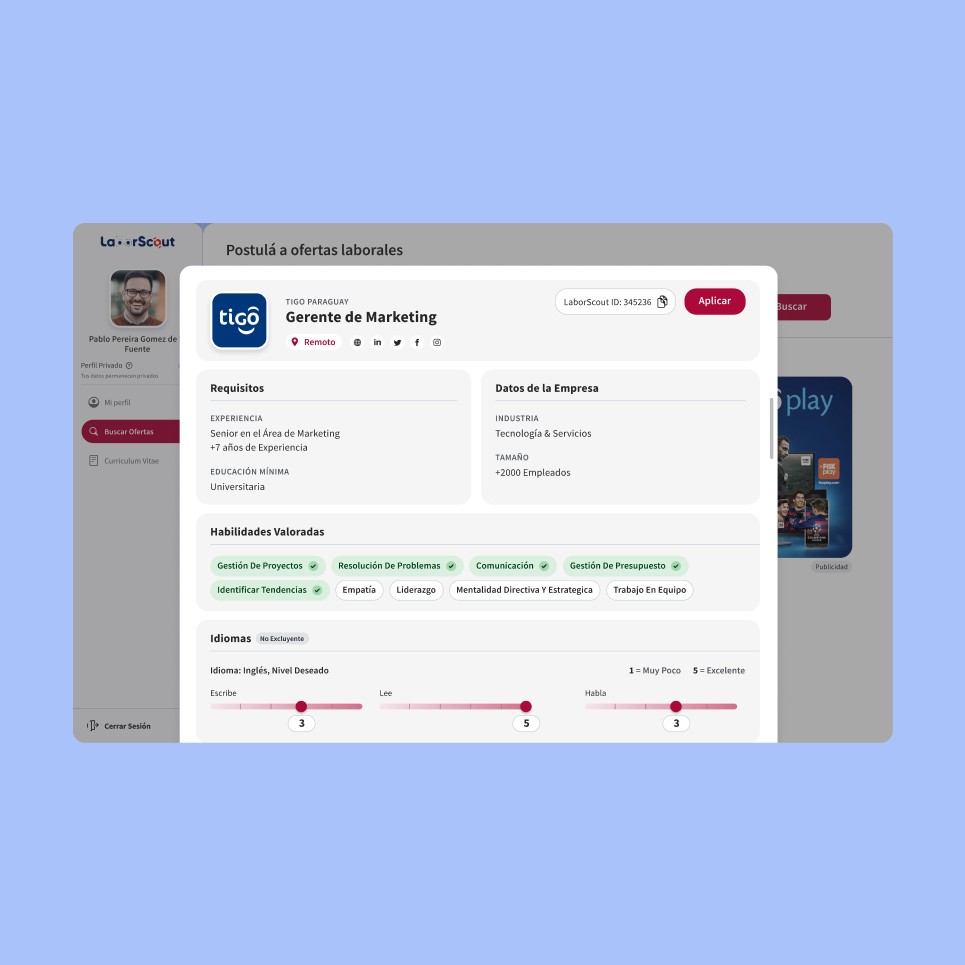
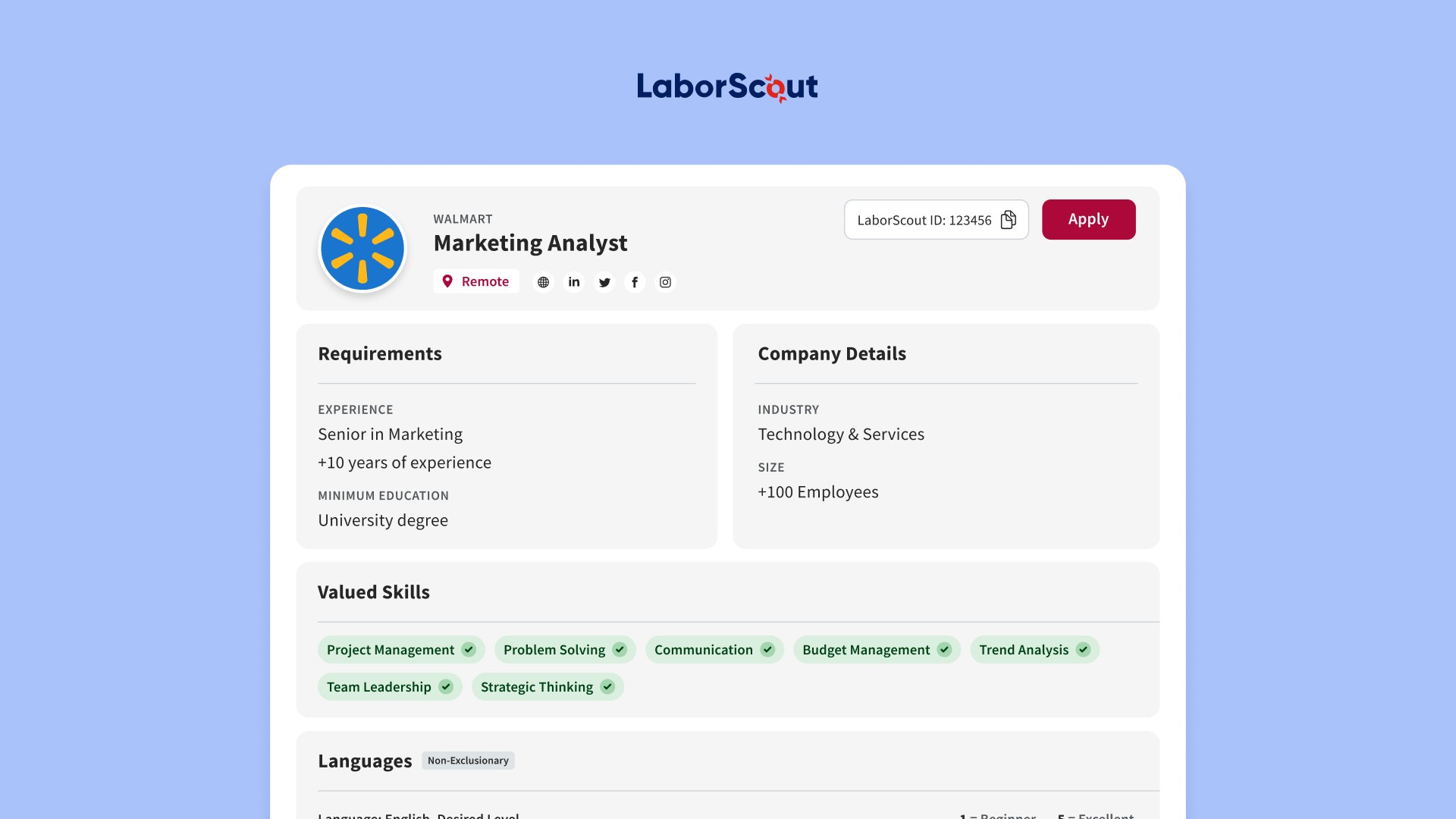
Job Offer Detail View — Candidate Side

Candidates get full context before applying (role requirements, company size, industry, and valued skills with instant match indicators)

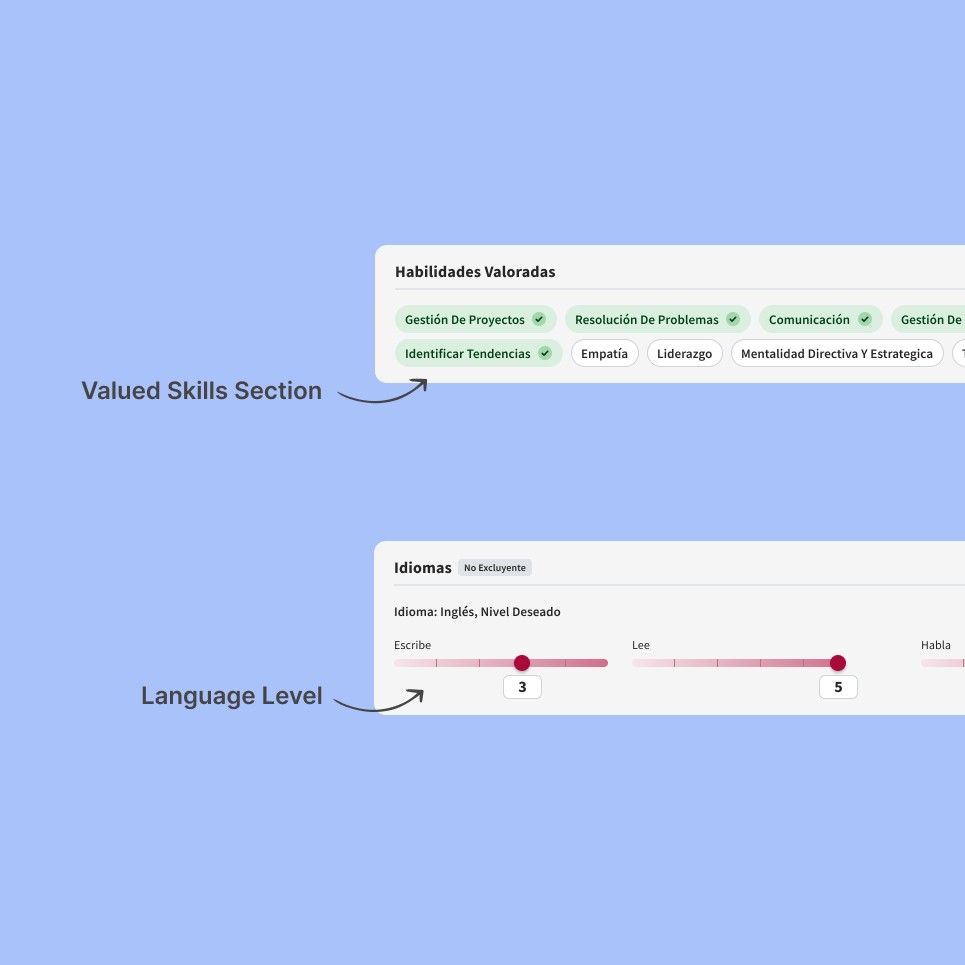
Skill Matching + Language Level

Matched skills surface first as green chips — giving candidates instant clarity on fit and reducing time-to-decision for recruiters. Language proficiency is defined per skill across reading, writing, and speaking, with a hard requirement flag. Both patterns eliminate ambiguity early, improving application quality and reducing post-interview mismatches.

Job Offer Detail View — Candidate Side

Candidates get full context before applying (role requirements, company size, industry, and valued skills with instant match indicators)

Skill Matching + Language Level

Matched skills surface first as green chips — giving candidates instant clarity on fit and reducing time-to-decision for recruiters. Language proficiency is defined per skill across reading, writing, and speaking, with a hard requirement flag. Both patterns eliminate ambiguity early, improving application quality and reducing post-interview mismatches.

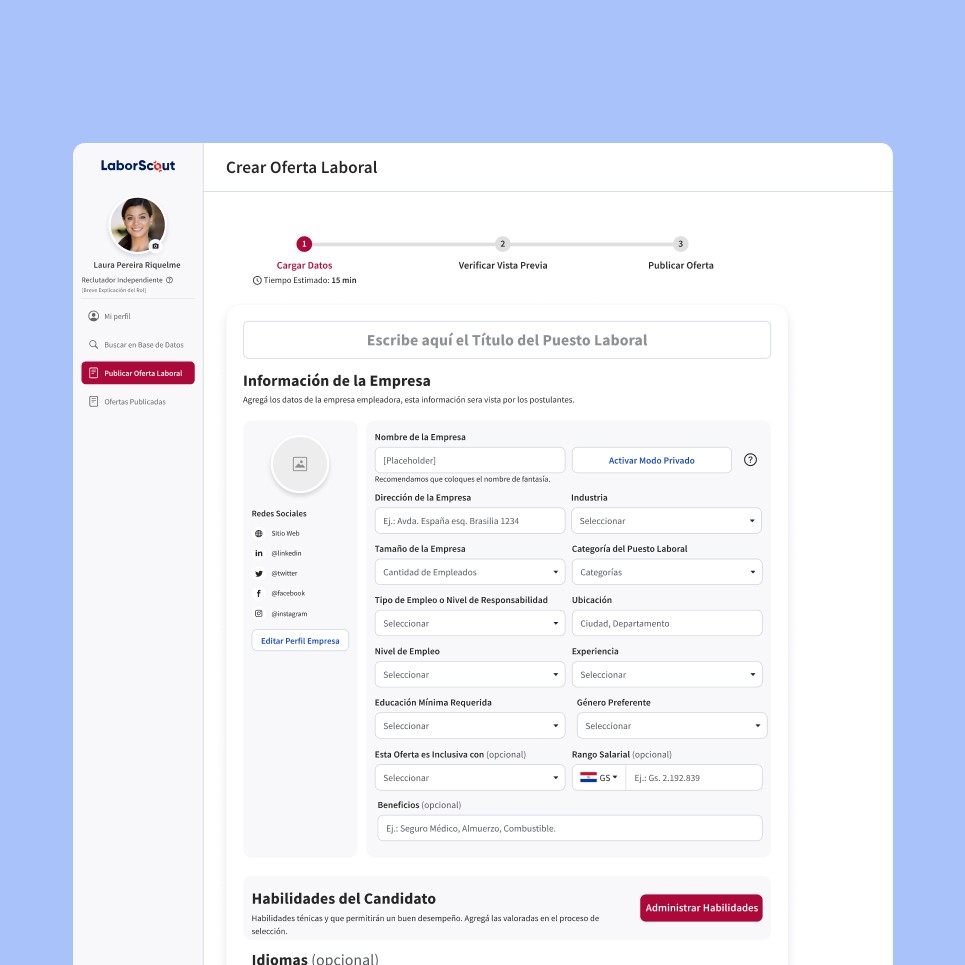
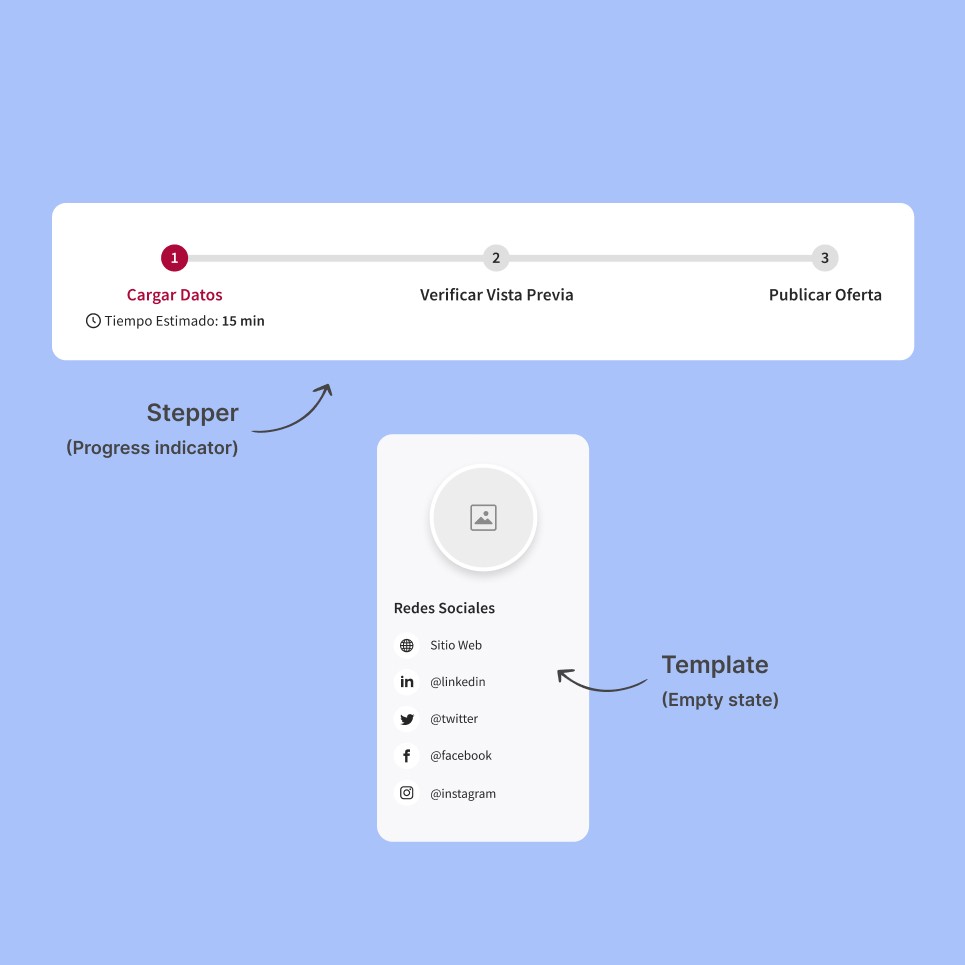
Job offer creation — Recruiter side

The job posting flow is structured as a guided 3-step process — data entry, preview, and publish — with an estimated time indicator (15 min) that sets expectations upfront and reduces abandonment. Optional fields like salary range and inclusive hiring criteria are surfaced but not enforced.

Stepper + Template (Empty State)

The stepper component uses numbered nodes with labeled stages, giving recruiters a clear mental model of the process before committing. The estimated time label is a deliberate friction-reduction pattern — setting expectations upfront increases task initiation and completion rates. The company profile template in its empty state uses placeholder social links to communicate expected content structure, guiding input without requiring instructions. Empty state design here serves as an implicit onboarding mechanism.

Job offer creation — Recruiter side

The job posting flow is structured as a guided 3-step process — data entry, preview, and publish — with an estimated time indicator (15 min) that sets expectations upfront and reduces abandonment. Optional fields like salary range and inclusive hiring criteria are surfaced but not enforced.

Stepper + Template (Empty State)

The stepper component uses numbered nodes with labeled stages, giving recruiters a clear mental model of the process before committing. The estimated time label is a deliberate friction-reduction pattern — setting expectations upfront increases task initiation and completion rates. The company profile template in its empty state uses placeholder social links to communicate expected content structure, guiding input without requiring instructions. Empty state design here serves as an implicit onboarding mechanism.

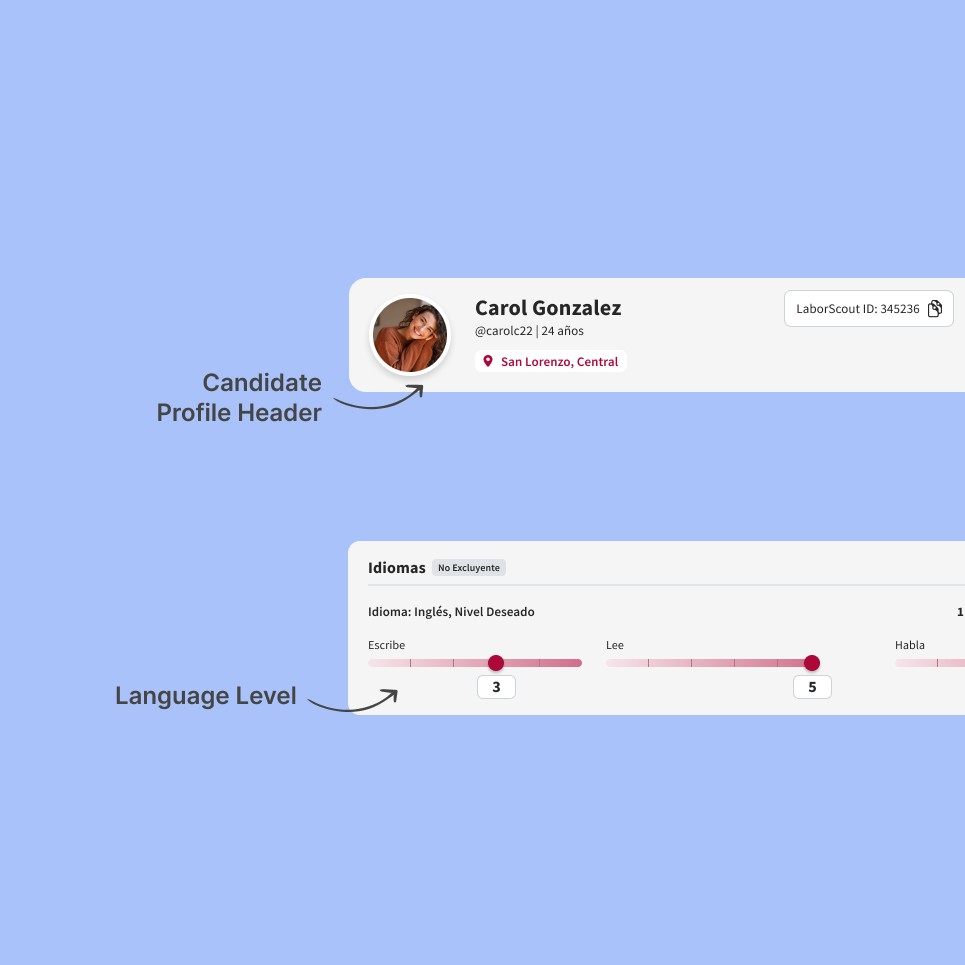
Candidate CV — Recruiter View

Recruiters access a structured candidate profile that surfaces identity, location, and a unique LaborScout ID for reference and tracking.

Candidate Profile Header + Skill Indicator

The LaborScript ID functions as a unique reference for tracking candidates across the pipeline without relying on personal data. Language proficiency is displayed using the same slider component from the job offer creation flow, creating visual consistency across both recruiter and candidate experiences.

Candidate CV — Recruiter View

Recruiters access a structured candidate profile that surfaces identity, location, and a unique LaborScout ID for reference and tracking.

Candidate Profile Header + Skill Indicator

The LaborScript ID functions as a unique reference for tracking candidates across the pipeline without relying on personal data. Language proficiency is displayed using the same slider component from the job offer creation flow, creating visual consistency across both recruiter and candidate experiences.

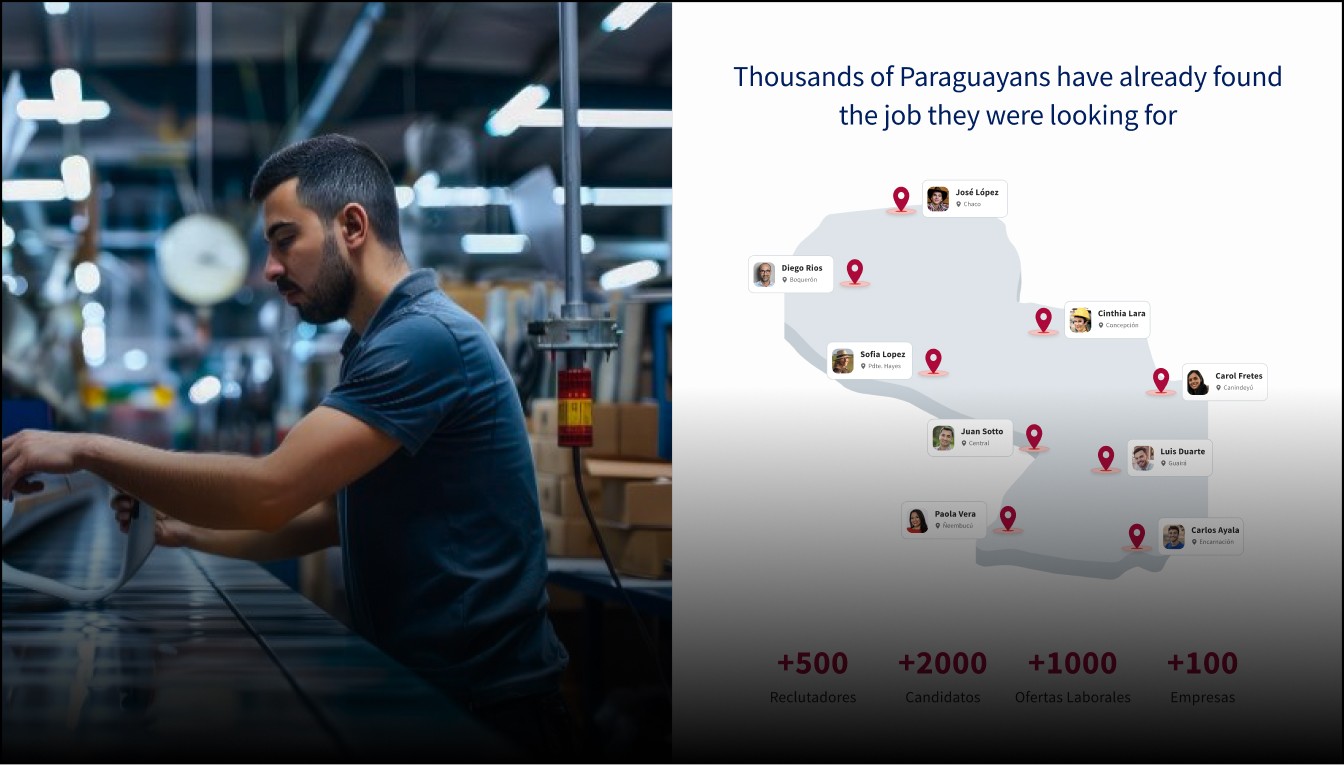
The impact

Launched May 1st — Labor Day in Paraguay. Version 1.0 delivered a functional recruitment platform with a complete design system ready to support V2.0 features.
<6 months

<6 months

MVP to launch

MVP to launch

MVP to launch

1k+

1k+

Job opportunities

Job opportunities

Job opportunities

70+

70+

Design system components

Design system components

Design system components

Designing for opportunity

Recruitment is more than matching resumes to job offers — it's about giving people a fair shot. LaborScout was built to make that process transparent, structured, and accessible on both sides: for job seekers navigating uncertainty, and recruiters looking for the right fit. Good design, in this context, means opening doors.